















What is Risk Management?
A risk is defined as a future problem or event that, should it occur, will (adversely) affect an organization’s or project’s objectives and viability.
Project risk management seeks to anticipate and address uncertainties that threaten the goals and timetables of a project. The uncertainties may include questions of material and parts quality; delays in delivery of sufficient materials to meet project needs; budgetary and personnel changes; and, incomplete knowledge or research.
These risks lead rapidly to delays in delivery dates and budget overspend that can severely undermine confidence in the project and in the project manager. Since project risk management is process oriented, it remains possible to have a successful project and an unsuccessful product (for example, an office construction project that meets or beats all time, budgetary, and quality requirements yet opens in a depressed property market). Whilst any project accepts a certain level of risk, regular and rigorous risk analysis and risk management techniques serve to defuse problems before they arise.
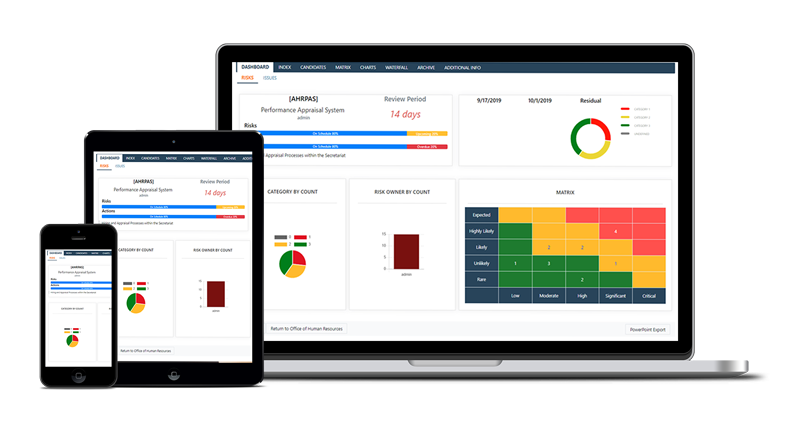
Risk Management is therefore a systematic process of identifying, analysing and responding to project risk. This may be broken down into a number of sub-processes which are used as the basis of our methodology. These risk management processes can be summarised as follows:
• Determine Risk Management Structure
• Risk and Issue Identification
• Evaluation and Planning
• Management and Control
• Management Reporting
Through investing a little time and effort in risk management up front, organisations can derive enormous benefits by avoiding significant problems downstream. Being proactive and treating the cause (the risk) is always preferable to being reactive and treating the symptoms (the impact).
Click here to Read More about the Benefits of Risk Management »
“I found the training incredibly useful as it starts from the basic definitions (what is risk, risk vs. issue, wording etc.) and ends with pretty advanced concepts of risk management. The pace of the presentation is exactly as it should be. I have already started to apply the concepts I have learned to my current project (i.e. rewriting my risk statements, creation of the risk map etc.)"
Thank you very much!!"
T.P - Procter & Gamble